Strange Skies
A native UAP (Unidentified Anomalous Phenomena) observation and tracking application. Built for field observers to securely log sightings, verify telemetry, explore global case files, and track real-time aerospace anomalies. Launching September 2026.
The brief
Field observers needed a purpose-built, low-light optimised app to rapidly log observations with accurate location data, telemetry details, and witness counts — without friction under pressure.
Our approach
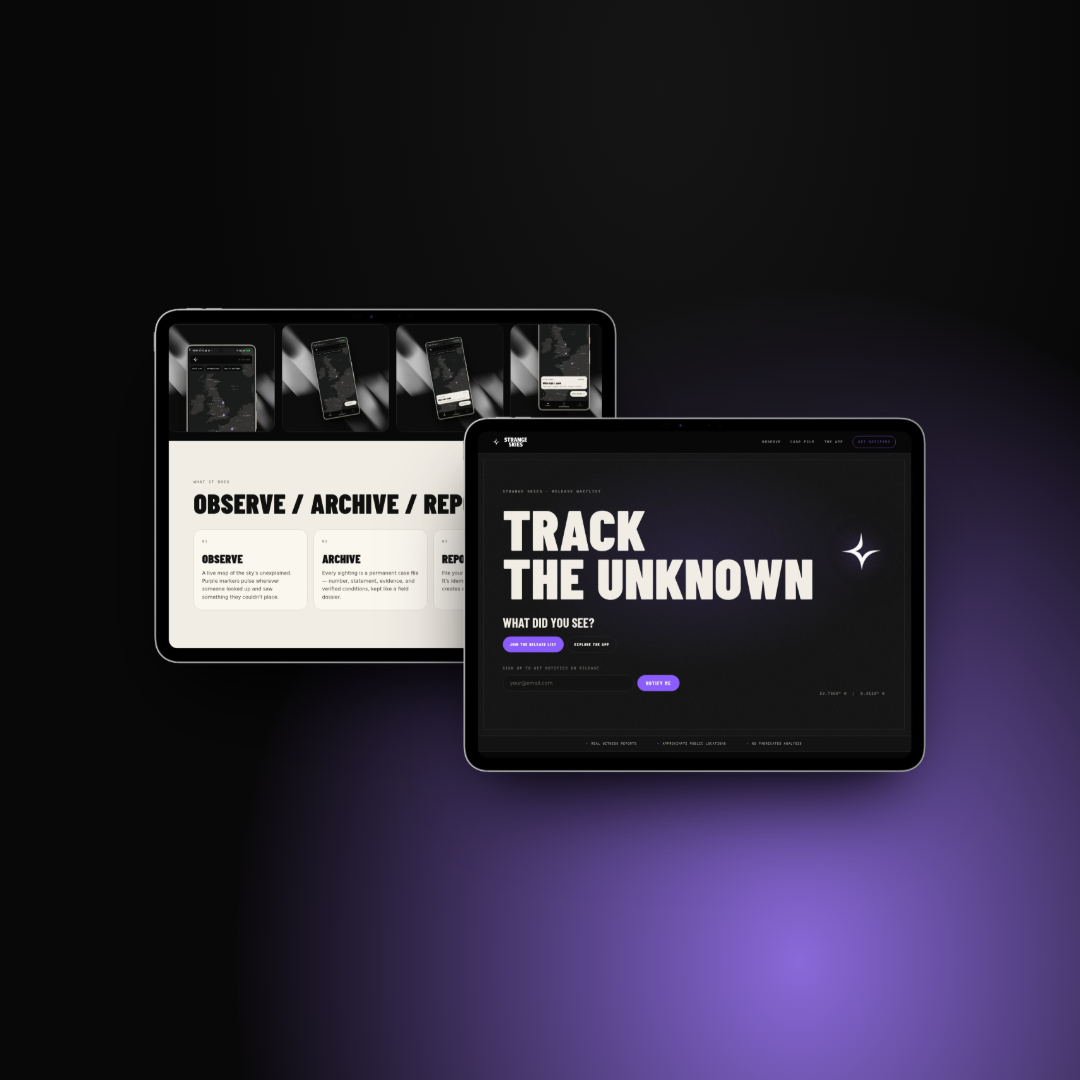
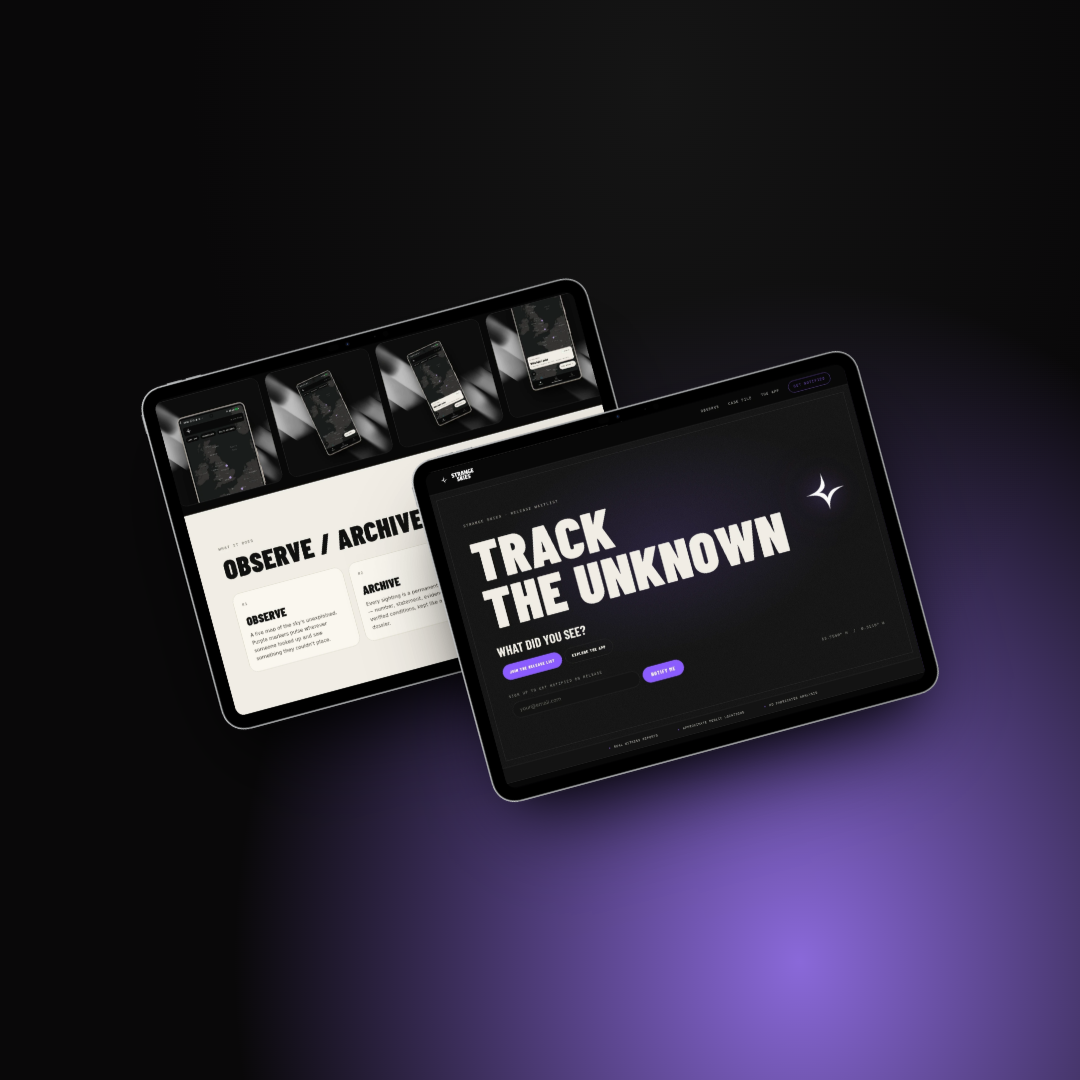
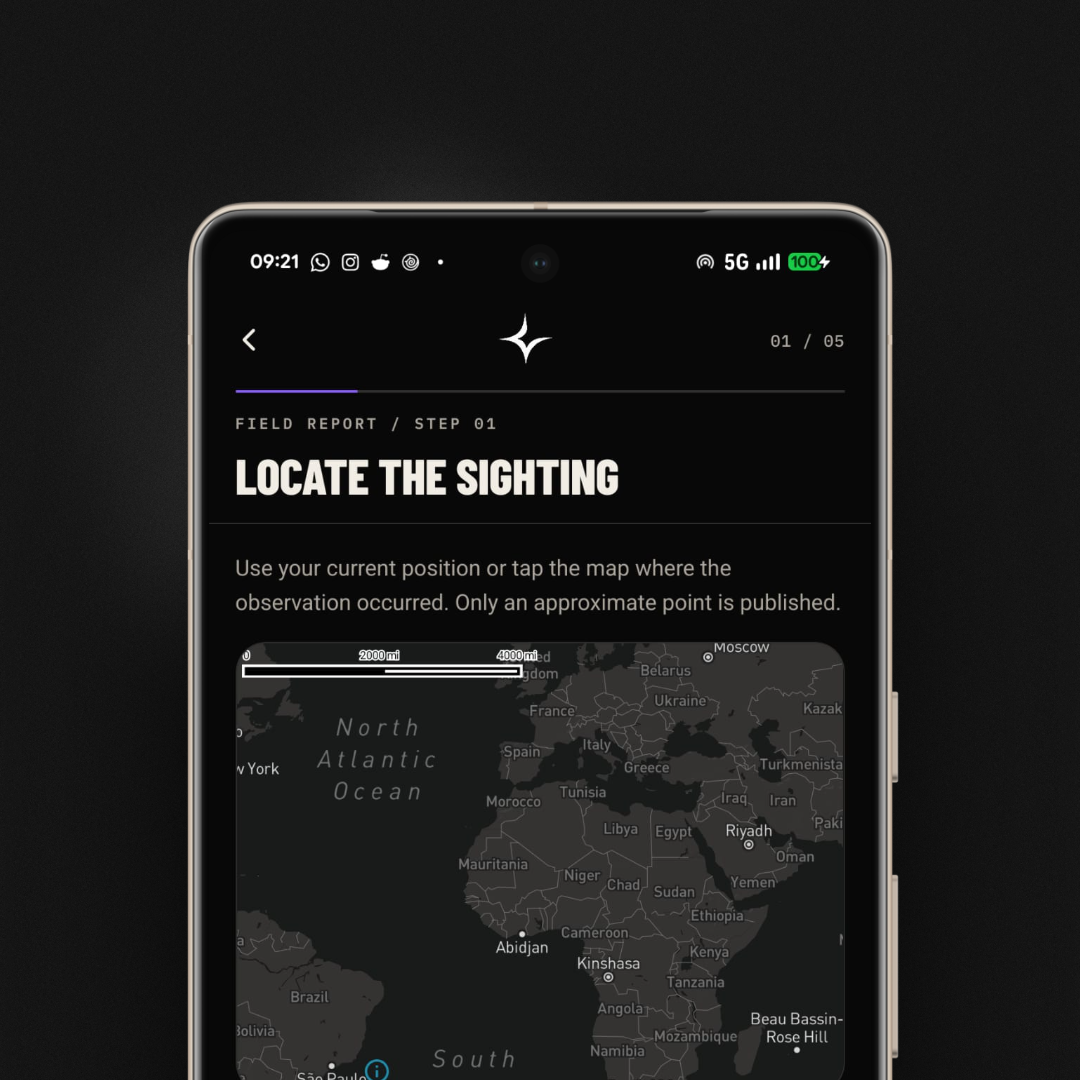
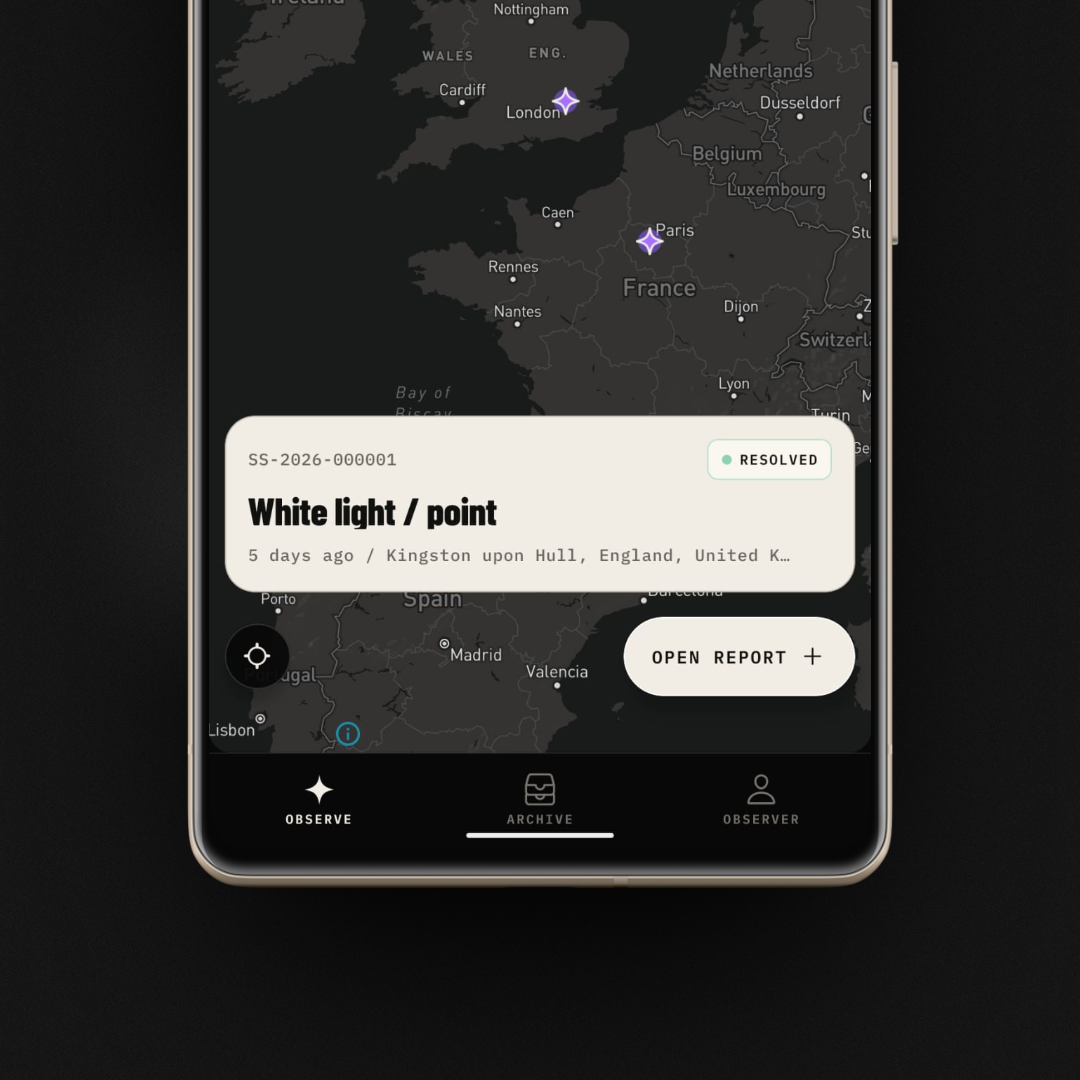
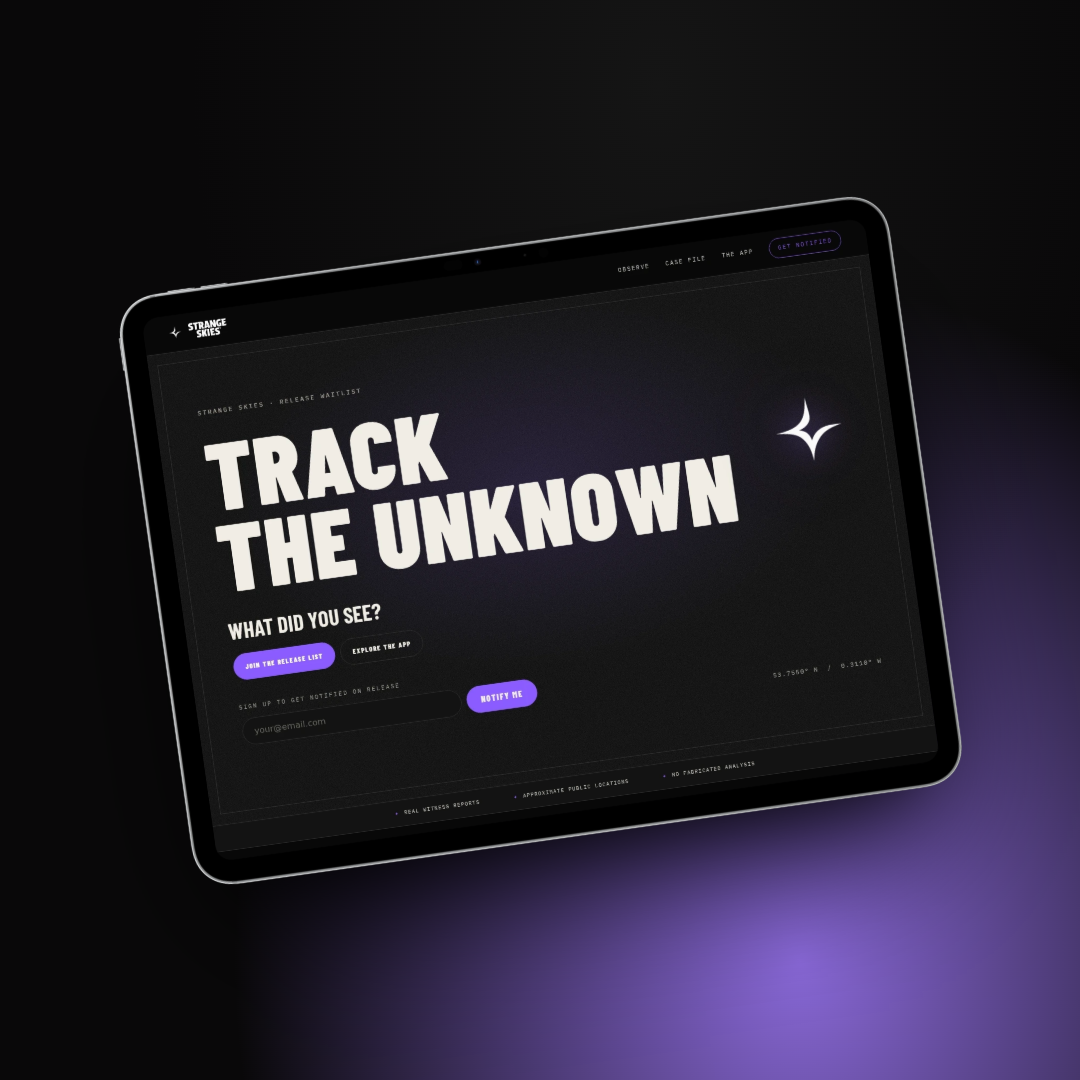
We designed and built a dark-mode utility app with a 5-step field report wizard, interactive Mapbox layers, a global archive grid, and authenticated observer records in React Native.
The outcome
A production-ready UAP tracking application in private beta, launching publicly in September 2026.
Case study
UAP observation is a serious, data-intensive discipline with no dedicated field tool built for it. Existing logging methods — notes apps, voice memos, generic forms — break down under pressure: poor light, time-sensitive data, multi-variable inputs. We built Strange Skies to solve that with a purpose-built interface designed around the way field observers actually work.
Why the Product Exists and Who It's ForStrange Skies is for credentialed field observers and serious hobbyists who need to capture sighting data with precision and speed. The product thesis is simple: the data is only as good as the tool used to collect it. If the interface adds friction at the moment of capture, the record is incomplete. We designed around that constraint from day one.
Product Strategy and First-Version DecisionsVersion one is deliberately scoped to the core loop: log a sighting, attach telemetry and location, submit to the global archive, browse verified case files. We kept accounts lightweight, skipped social features, and focused entirely on data integrity and speed of capture. The public archive and observer verification layer comes in post-launch, once the core logging experience is proven in the field.
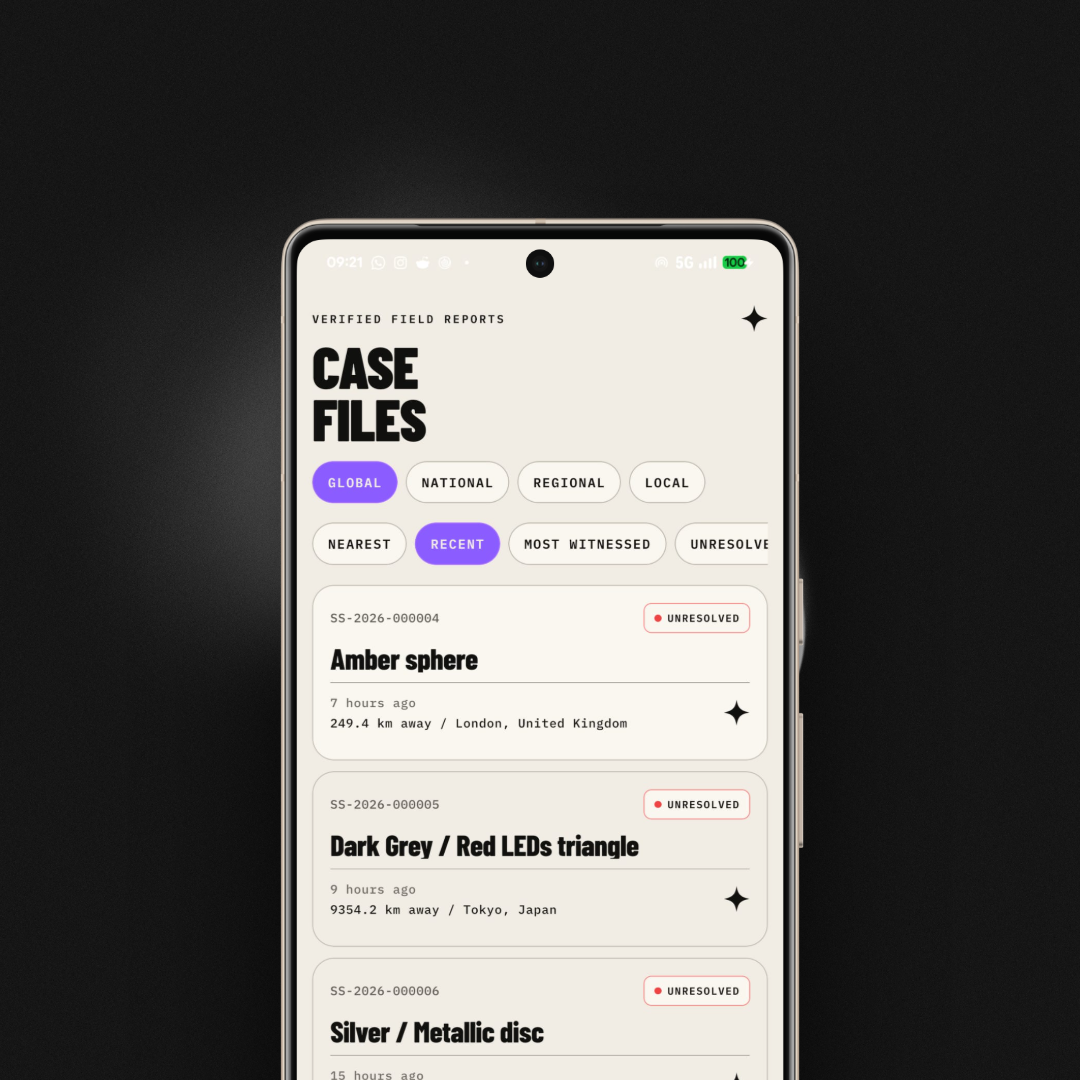
UX/UI ApproachThe design system is built for low-light, high-urgency use. Dark-mode only, maximum contrast, and a simplified 5-step report flow that captures location, duration, description, witness count, and evidence attachments in under two minutes. Every tap target is oversized for use while moving or in variable conditions. The global archive uses a dense, scannable grid rather than editorial cards — because the audience values information density over aesthetics.
Technical Architecture and Data SourcesThe application is built in React Native for cross-platform deployment. Location data is pulled from device GPS and cross-referenced with Mapbox for visual mapping layers. The report pipeline validates and timestamps submissions server-side before writing to the case file archive. The architecture is designed to handle concurrent submissions without data loss, with offline queuing for submissions made in areas with poor connectivity.
What Shro Designed and Built DirectlyThe full product: concept development, UX research and wireframing, UI design system, React Native build, Mapbox integration, report pipeline, archive database, and observer verification logic. Strange Skies is a Shro Web product — no external design agency, no third-party development.
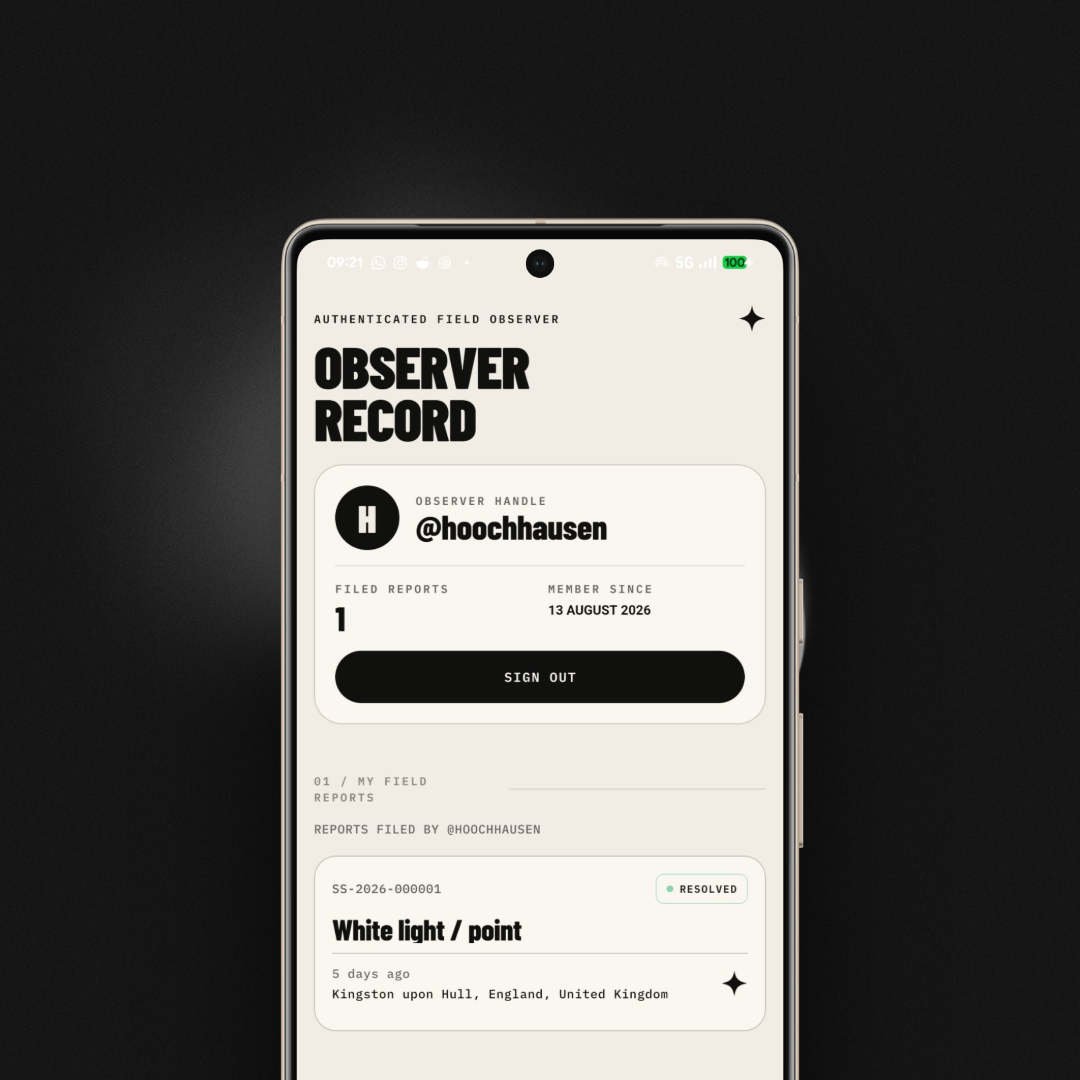
Current StatusStrange Skies is in private beta ahead of a public launch in September 2026. The initial release includes the full field report flow, interactive global map, verified observer records, and the public case file archive.
What It Demonstrates to a Prospective ClientStrange Skies is an example of what Shro Web delivers when scoping a native app from scratch: a structured product brief, a UX system built around real user behaviour under constraint, a scalable data architecture, and a polished production build ready for the App Store. If you need a native or cross-platform app designed and built properly from version one, this is the reference point.
Platform Interface